From a medieval clock to the Elizabeth Tower
There has been a clock at Westminster for more than 650 years. Big Ben has been striking since 1859.
Big Ben is the bell; the Elizabeth Tower is the tower. Dates and figures come from the sources linked beside them; where sources disagree, we show each one.
Before Big Ben
A clock tower is said to have stood on the site in the 1290s, but there are no records of it. UK Parliament, key dates
In 1367 a new tower and clock were built; Parliament calls it the first public chiming clock in England. UK Parliament, key dates
In 1698 the medieval clock tower was pulled down and a sundial put up in its place. UK Parliament, key dates
Its old bell was sent to St Paul’s Cathedral in 1699 and broke on the way. UK Parliament, key dates Recast in 1716, that bell later hung in the south-west tower of St Paul’s, and if Big Ben is ever unable to strike, the St Paul’s bell is heard instead. UK Parliament, key dates
The fire and the competition
The old Palace of Westminster was almost completely burned down in 1834. Only Westminster Hall, St Stephen’s Cloister and the Chapel of St Mary Undercroft survived much as they were. UK Parliament
In June 1835 a public competition was held to design a new palace in Gothic or Elizabethan style. There were 97 entries, and the Royal Commission chose entry number 64 unanimously. UK Parliament
Entry 64 was by the architect Charles Barry. It had two towers: a grand royal entrance to the south and a smaller clock tower to the north. UK Parliament
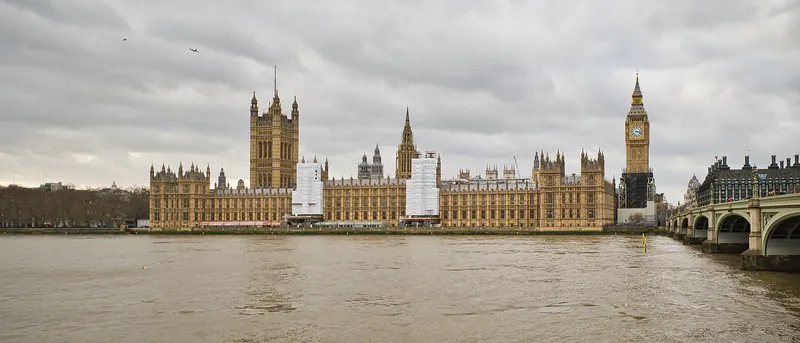
Building it
Building the new palace began in 1840, and Barry brought in Pugin to help with its Gothic Revival style. UK Parliament, key dates
The foundation stone of the clock tower was laid on 28 September 1843. UK Parliament
Building fell five years behind schedule, and Parliament moved into its new home before the tower was finished. From foundation stone to the first bells took sixteen years. UK Parliament
The full story of the design and the building is on the tower page.
The clock and the bells
In 1846 a competition was held to decide who would build the clock, refereed by the Astronomer Royal, Sir George Airy. UK Parliament The accuracy rules meant it took seven years before the designs were finalised. UK Parliament, key dates
The winning designs, in February 1852, were by Edmund Beckett Denison, a lawyer and amateur clock expert, so the chronometer maker Edward John Dent was appointed to build the clock. UK Parliament
John Warner’s foundry near Stockton-on-Tees cast the first Great Bell in August 1856, and his firm cast the four quarter bells at Cripplegate in London later that year. UK Parliament
Denison wanted the loudest sound possible and used a huge hammer. The bell was tested daily until 17 October 1857, when a crack 1.2 metres long appeared. The hammer was too heavy. UK Parliament
The cracked bell was melted down and recast by George Mears at the Whitechapel Bell Foundry on 10 April 1858. That second bell is the one in the tower today. UK Parliament
The clock was installed in April 1859, once the building work was complete, and began keeping time on 31 May 1859. UK Parliament
Big Ben rang out for the first time on 11 July 1859. In September it cracked too, and for four years the largest quarter bell struck the hours instead. UK Parliament
The fix was made in 1863, and Big Ben struck the hours again. UK Parliament, key dates
More on the bells and the Great Clock, including where the name Big Ben came from.
A voice on the radio
BBC Radio first broadcast the chimes across the UK on New Year’s Eve 1923, and in 1932 the Empire Service carried them abroad for the first time, in King George V’s Christmas broadcast. UK Parliament, key dates
The hour bell has been tolled slowly to mark the deaths of four sovereigns: Edward VII, George V, George VI and Elizabeth II. For Sir Winston Churchill’s funeral, the bells were silent as a mark of respect. UK Parliament
The Second World War
From 1939 to 1945 the dial lights and the Ayrton Light were switched off, so the tower could not help German bombers find their way. UK Parliament
The Palace was hit by bombs 14 times. On 10–11 May 1941 a small bomb hit the clock tower and broke all the glass in the south dial, but the clock and bells were undamaged and the chimes were broadcast as usual. UK Parliament
Broadcast on the radio, the bells became a symbol of freedom during the Second World War. UK Parliament
Breakdowns and repairs
On 5 August 1976 a mechanical failure badly damaged the clock: the weights spiralled out of control down the weight shaft and the mechanism blew apart. Big Ben was silent for nearly nine months, back in time for the Queen’s Silver Jubilee visit to Westminster Hall in May 1977. UK Parliament, key dates
In 2007 Big Ben and the quarter bells were silenced from 11 August to 1 October for maintenance on the clock. UK Parliament, key dates
Before 2017 the tower had been wrapped in scaffolding for repairs three times: in the 1930s, 1950s and 1980s. UK Parliament
A new name
On 25 June 2012 the House of Commons Commission renamed the Clock Tower the Elizabeth Tower, for Queen Elizabeth II’s Diamond Jubilee, after a campaign backed by MPs across the House. UK Parliament
Queen Victoria had a similar honour: the big tower at the southern end of the Palace, the royal entrance, is the Victoria Tower. UK Parliament
The biggest repair yet
Wrapped in scaffolding from 2017 to 2022, the tower was repaired from the gilt cross and orb at the top to the foot of its 334-step staircase. UK Parliament
Big Ben’s official return came at 11 am on Remembrance Sunday, 13 November 2022, striking eleven times for the Two Minutes’ Silence. UK Parliament, 2022
The whole restoration is on its own page.
Timeline
- 1290s A clock tower is said to have stood on the site in the 1290s, but there are no records of it. UK Parliament, key dates
- 1367 In 1367 a new tower and clock were built; Parliament calls it the first public chiming clock in England. UK Parliament, key dates
- 1698 In 1698 the medieval clock tower was pulled down and a sundial put up in its place. UK Parliament, key dates
- 1834 The old Palace of Westminster was almost completely burned down in 1834. Only Westminster Hall, St Stephen’s Cloister and the Chapel of St Mary Undercroft survived much as they were. UK Parliament
- June 1835 In June 1835 a public competition was held to design a new palace in Gothic or Elizabethan style. There were 97 entries, and the Royal Commission chose entry number 64 unanimously. UK Parliament
- 1840 Building the new palace began in 1840, and Barry brought in Pugin to help with its Gothic Revival style. UK Parliament, key dates
- 28 September 1843 The foundation stone of the clock tower was laid on 28 September 1843. UK Parliament
- 1846 In 1846 a competition was held to decide who would build the clock, refereed by the Astronomer Royal, Sir George Airy. UK Parliament
- February 1852 The winning designs, in February 1852, were by Edmund Beckett Denison, a lawyer and amateur clock expert, so the chronometer maker Edward John Dent was appointed to build the clock. UK Parliament
- 1854 The clock mechanism was completed in 1854, years before the tower was ready for it. UK Parliament, key dates
- August 1856 John Warner’s foundry near Stockton-on-Tees cast the first Great Bell in August 1856, and his firm cast the four quarter bells at Cripplegate in London later that year. UK Parliament
- 17 October 1857 Denison wanted the loudest sound possible and used a huge hammer. The bell was tested daily until 17 October 1857, when a crack 1.2 metres long appeared. The hammer was too heavy. UK Parliament
- 10 April 1858 The cracked bell was melted down and recast by George Mears at the Whitechapel Bell Foundry on 10 April 1858. That second bell is the one in the tower today. UK Parliament
- 31 May 1859 The clock was installed in April 1859, once the building work was complete, and began keeping time on 31 May 1859. UK Parliament
- 11 July 1859 Big Ben rang out for the first time on 11 July 1859. In September it cracked too, and for four years the largest quarter bell struck the hours instead. UK Parliament
- 1863 The fix was made in 1863, and Big Ben struck the hours again. UK Parliament, key dates
- 1923 and 1932 BBC Radio first broadcast the chimes across the UK on New Year’s Eve 1923, and in 1932 the Empire Service carried them abroad for the first time, in King George V’s Christmas broadcast. UK Parliament, key dates
- 1939–1945 From 1939 to 1945 the dial lights and the Ayrton Light were switched off, so the tower could not help German bombers find their way. UK Parliament
- 5 August 1976 On 5 August 1976 a mechanical failure badly damaged the clock: the weights spiralled out of control down the weight shaft and the mechanism blew apart. Big Ben was silent for nearly nine months, back in time for the Queen’s Silver Jubilee visit to Westminster Hall in May 1977. UK Parliament, key dates
- 25 June 2012 On 25 June 2012 the House of Commons Commission renamed the Clock Tower the Elizabeth Tower, for Queen Elizabeth II’s Diamond Jubilee, after a campaign backed by MPs across the House. UK Parliament
- 21 August 2017 The bongs stopped after the 12 noon chimes on 21 August 2017; the striking was paused to protect the people working in the tower. UK Parliament
- 13 November 2022 Big Ben’s official return came at 11 am on Remembrance Sunday, 13 November 2022, striking eleven times for the Two Minutes’ Silence. UK Parliament, 2022
Next: the bells →