Accurate to a second, regulated with pennies
The Victorians wanted the most accurate public clock in the world. A lawyer designed it.
Big Ben is the bell; the Elizabeth Tower is the tower. Dates and figures come from the sources linked beside them; where sources disagree, we show each one.
Who would build it?
Barry was no clock specialist. He first asked Benjamin Lewis Vulliamy, the Queen’s Clockmaker, but other clockmakers such as Edward John Dent wanted the job, and disputes broke out. UK Parliament
In 1846 a competition was held to decide who would build the clock, refereed by the Astronomer Royal, Sir George Airy. UK Parliament
Airy wanted the most accurate turret clock in the world: the first stroke of each hour had to be right to within one second. UK Parliament
Until then, time had largely gone by the sun, so it varied by about 15 minutes across Britain. UK Parliament
The accuracy rules meant it took seven years before the designs were finalised. UK Parliament, key dates
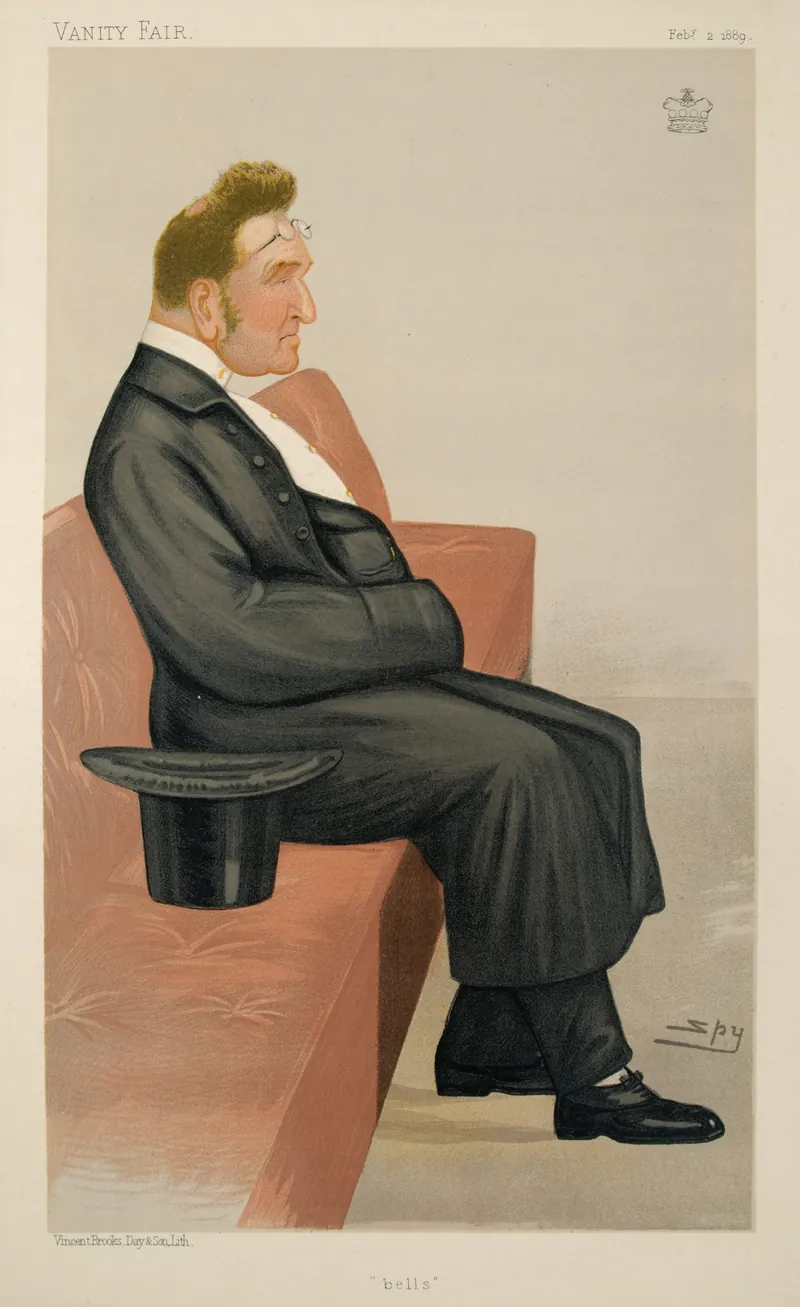
The winning designs, in February 1852, were by Edmund Beckett Denison, a lawyer and amateur clock expert, so the chronometer maker Edward John Dent was appointed to build the clock. UK Parliament
Making it
The mechanism took two years to make and cost £2,500, which Parliament puts at about £285,000 today. UK Parliament
The clock mechanism was completed in 1854, years before the tower was ready for it. UK Parliament, key dates
The clock was installed in April 1859, once the building work was complete, and began keeping time on 31 May 1859. UK Parliament
To check it, the time from the Royal Observatory at Greenwich was sent to Westminster by telegraph wire. The clock passed. UK Parliament
The dials and hands
There are four clock dials, each made of 324 pieces of pot opal glass in a cast-iron frame. Parliament’s facts page gives the dials as 7 metres across, with hour figures 60 centimetres long. UK Parliament, facts and figures
Four o’clock is shown as IV, not the IIII found on many clocks. UK Parliament, 2021
The minute hands are copper sheet, 4.2 metres long and 100 kilograms each. They travel about 190 kilometres a year, roughly London to Weymouth. UK Parliament, facts and figures
The hour hands are gunmetal, 2.7 metres long and three times heavier, at 300 kilograms. UK Parliament, facts and figures
How wide are the dials? Sources differ slightly
- There are four clock dials, each made of 324 pieces of pot opal glass in a cast-iron frame. Parliament’s facts page gives the dials as 7 metres across, with hour figures 60 centimetres long. UK Parliament, facts and figures
- Parliament’s tour page says each dial spans 6.9 metres in diameter. UK Parliament tours
Both are Parliament pages; neither says where the measurement is taken, so we give both.
The mechanism
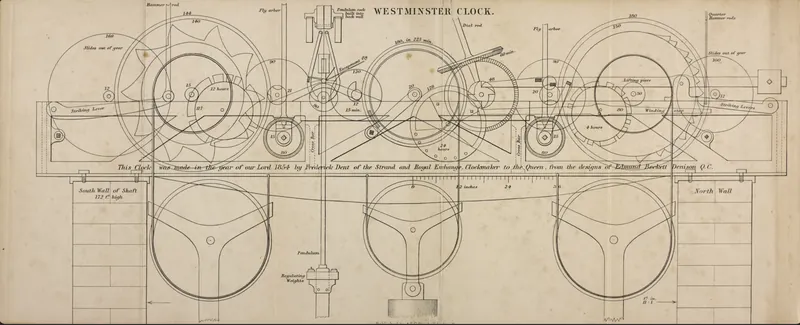
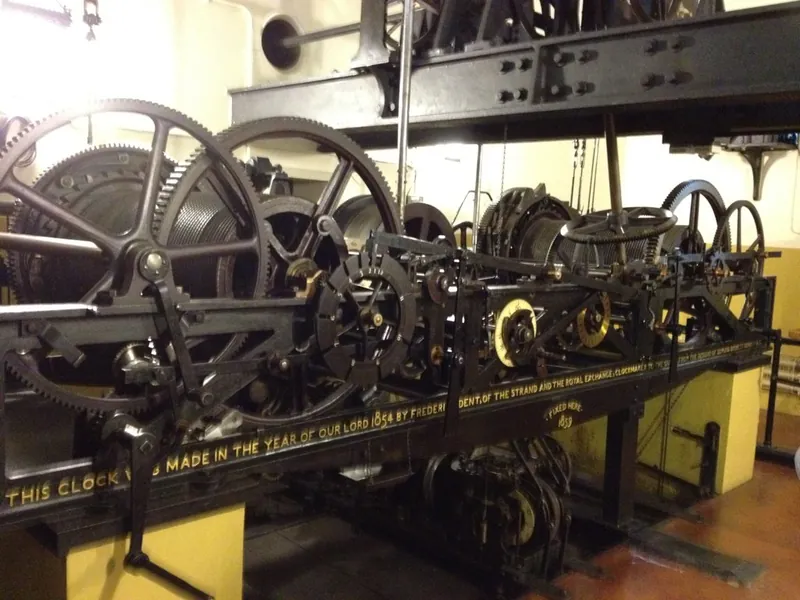
Parliament’s facts page says the mechanism weighs 5 tonnes, is made of cast iron, and is 4.7 metres long and 1.4 metres wide. UK Parliament, facts and figures
Wind on the huge hands could upset the timekeeping, so Denison designed the ‘Double Three-legged Gravity Escapement’, which compensates for outside forces on the mechanism. UK Parliament, facts and figures
Each beat of the pendulum lasts two seconds. UK Parliament, facts and figures
The same page gives the pendulum as 4.4 metres long and 310 kilograms, with a 203-kilogram bob made of concentric steel and zinc tubes. UK Parliament, facts and figures
The clock is fine-tuned with pre-decimal pennies: adding one makes the clock gain two-fifths of a second in 24 hours. UK Parliament, facts and figures
How heavy is the clock?
The Great Clock’s weight: sources differ
- Parliament’s facts page says the mechanism weighs 5 tonnes, is made of cast iron, and is 4.7 metres long and 1.4 metres wide. UK Parliament, facts and figures
- In 2019 Parliament described the clock mechanism being taken apart as the 11-tonne mechanism. UK Parliament, 2019
- The company said the parts together weigh eleven and a half tonnes, and gave the pendulum as 170 kilograms. UK Parliament, 2021
- For the first time in its history the clock was dismantled, winched 53 metres down and taken away for a complete overhaul. Parliament’s conservation page calls it the 12-tonne clock. UK Parliament
All four come from Parliament’s own pages. They may be weighing different things, such as the frame alone or every part including the weights, but none of them says, so we show all four.
The pendulum’s weight: sources differ
- The same page gives the pendulum as 4.4 metres long and 310 kilograms, with a 203-kilogram bob made of concentric steel and zinc tubes. UK Parliament, facts and figures
- The company said the parts together weigh eleven and a half tonnes, and gave the pendulum as 170 kilograms. UK Parliament, 2021
The facts page and the restorers give very different figures; we have not found a source that explains the gap.
Is it right?
In 1930 an MP complained that Big Ben was three minutes slow compared with every other clock. The minister replied that in 290 days the error had passed one second on only eight, and that “all the others are wrong and that Big Ben is right”. UK Parliament
The Great Clock was the largest and most accurate clock in the world when it was built, and it is still the biggest striking and chiming turret clock in the UK. UK Parliament
When it stops
Parliament lists some long Great Clock stoppages: two months in 1934, six months in 1956, and six weeks in 2007, the longest since 1990. In 2005 it stopped for two days so the brake shaft could be inspected. UK Parliament, facts and figures
On 5 August 1976 a mechanical failure badly damaged the clock: the weights spiralled out of control down the weight shaft and the mechanism blew apart. Big Ben was silent for nearly nine months, back in time for the Queen’s Silver Jubilee visit to Westminster Hall in May 1977. UK Parliament, key dates
In 2007 Big Ben and the quarter bells were silenced from 11 August to 1 October for maintenance on the clock. UK Parliament, key dates
There are more than 2,000 clocks on the Parliamentary Estate, and Parliament’s clock mechanics change them all, the Great Clock included, when the clocks go forward and back. UK Parliament, 2021
How the clock was taken apart and rebuilt in 2017–22 is on the restoration page.
Next: the tower →